By WYA Advocacy Team
The 59th session of the Commission on Population and Development (CPD59) which convened upon the theme of “Population, Technology and Research in the Context of Sustainable Development,” concluded Friday, April 17th, 2026 without the adoption of an outcome document.
The failed negotiations reflected a dispute among Member States over provisions for digital transfer of technology between developed and developing countries. Developed countries insisted on including the phrase “voluntary and mutually agreed terms” (VMAT), while developing countries rejected such caveats. However, as in previous years, sexual and reproductive health and rights (SRHR) language continued to be a formidable obstacle to consensus, despite “health” not being an explicit focus of the Commission. This terminology is problematic in that it is not the consensus language agreed upon in Cairo in 1994 at the International Conference on Population and Development. Rather, since then, it has been used by certain advocates and a number of primarily developed countries to push for abortion as an international human right.
Surprisingly, countries such as Germany, South Africa, and Jamaica, vocal champions of SRHR language, acknowledged declining fertility rates as a matter of concern for sustainable development and even went so far as advocating for tacit pro-family positions revealing a striking paradox: in their efforts to resolve the issue, they inadvertently weaken the very solution.
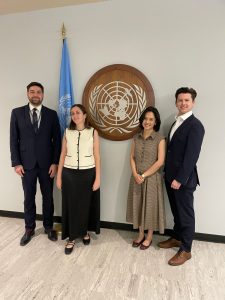
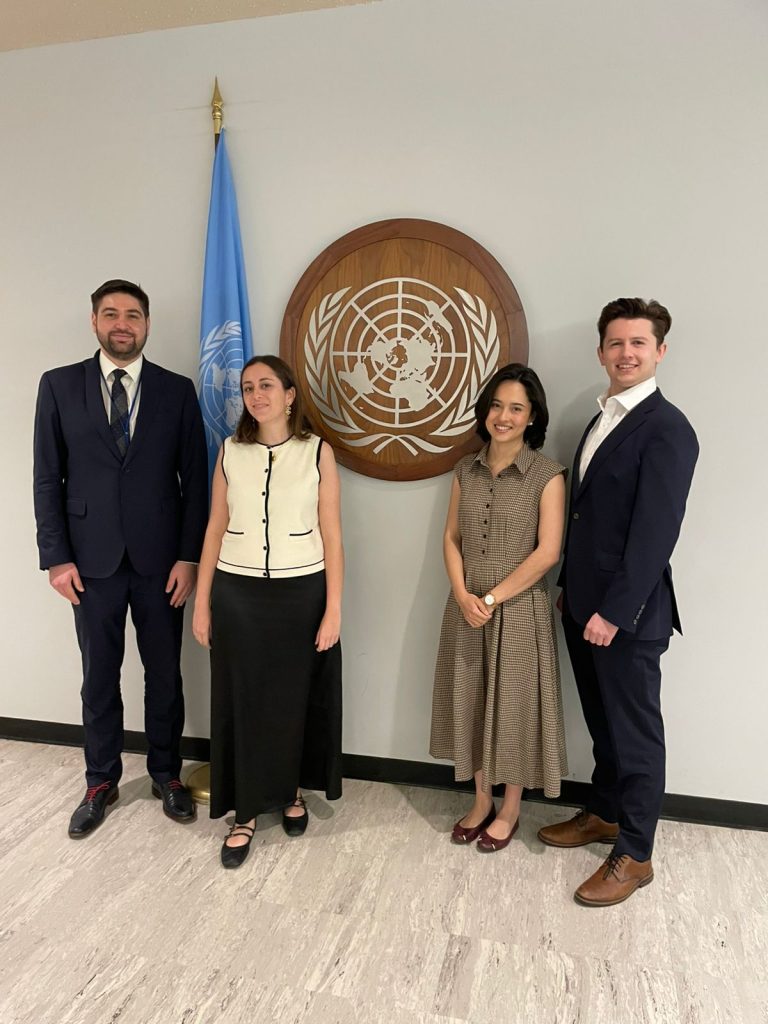
During our intervention at the Commission, the WYA Advocacy Team made clear to those in favor of drawing the focus of the Commission to SRHR that, “[w]e believe human dignity must remain at the center of the ethical use of technology and research. When we advance in the use of technology without taking into consideration the dignity of the human person, we risk causing harm to the most vulnerable members of our society such as; the unborn, persons with disabilities, and the elderly.”
Norway, along with many other European countries, insisted upon the inclusion of SRHR in this year’s Commission. At the opening session, the representative of Norway made the following statement:
“Morality becomes hypocrisy if it means accepting mothers suffering or dying in connection with unwanted pregnancies and illegal abortions and unwanted children living in misery. These were the honest words of former Prime Minister of Norway, Gu Hallmbrund when she addressed the first ICPD in Cairo more than 30 years ago.”
This framing of the Commission exemplified, in miniature, the brazen manner in which delegations push the fallacious narrative that SRHR has and always will be central to the CPD. The revisionist interpretation of the inaugural ICPD Program of Action (PoA) clearly conflicts with paragraph 8.25 of the original document which states:
“In no case should abortion be promoted as a method of family planning…Prevention of unwanted pregnancies must always be given the highest priority and every attempt should be made to eliminate the need for abortion. Women who have unwanted pregnancies should have ready access to reliable information and compassionate counselling. Any measures or changes related to abortion within the health system can only be determined at the national or local level according to the national legislative process”
WYA was encouraged by interventions from several delegations that challenged the use of SRHR terminology and reaffirmed the lack of consensus among Member States. Upholding the original interpretation of the ICPD PoA, the Ambassador of Honduras, Mary Elizabeth Flores Flake, stepped out of line with the pro-SRHR faction announcing before all that the protection of life from conception to natural death is contained in their constitution. “The right to life is inviolable […] The unborn shall be considered as born for all purposes that benefit them, within the limits established by law.”
Belarus affirmed that “there was a lack of consensus among Member States on the text of the final document. The negotiation process shows that there are still attempts to use the Commission to advance non-consensual terminology and to impose approaches that are not acceptable for national legislation. National needs are being ignored, as well as the development priorities of sovereign states, and religious and cultural specificities are also being ignored. (…) [O]nly if we account for the views of all participants in the negotiations can we achieve genuine consensus and contribute to overcoming current challenges.”
A notable tension in this year’s CPD was the contradiction within pro-SRHR delegations’ statements which were proposing provisions for family friendly environments as a means to ameliorating low-fertility rates and aging demographic trends, while continuing their advocacy for SRHR. Their comments put on full display how the effects of population control measures contained within the revisionist interpretation of the ICPD PoA ultimately undermine sustainable development.
While the US stood firm in opposing the SRHR agenda, it joined the developed European, North American and Asian countries that were blocking consensus, not as adversaries, but as allies jointly insisting on the VMAT caveat concerning transfer of (digital) technology.
Despite the lack of consensus at this CPD, the negotiations brought to light that Member States, instead of reassessing this strategy in light of its evident limitations, remained fixated on reaffirming these same points of contention. The presence of the WYA Advocacy Team ensured that the principles of human dignity and the original commitments of the ICPD Programme of Action remained part of the discussion. The WYA Advocacy Team looks forward to covering the CPD60 next year.