By: Mislav Barišić, WYA Director of Policy and Research
The 70th session of the Commission on the Status of Women (CSW70) marked an unprecedented moment in United Nations history. For the first time, Agreed Conclusions, traditionally adopted by consensus, were put to a vote – as we reported in our previous article.
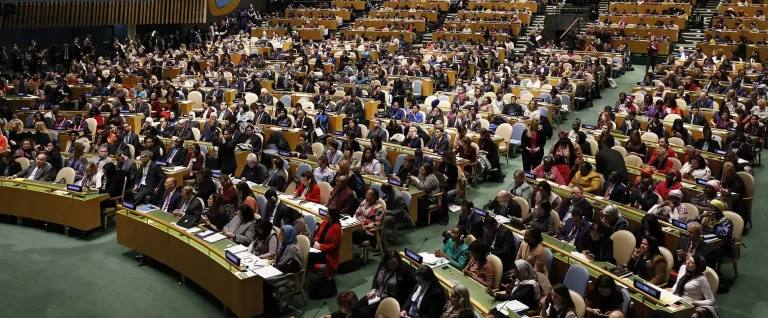
The final day of the CSW, Thursday March 19th, 2026, was marked by an interesting debate and procedural motions intent on avoiding it. Following the unprecedented adoption of the Agreed Conclusions by vote earlier in the session, Thursday’s proceedings became a forum for Member States to formally record their positions. What emerged was a great display of the divide in the international community over the role of the UN and the CSW, visible in their comments on the substance of the outcome document and the procedural rupture that defined this year’s Commission.
For the World Youth Alliance (WYA), the final session revealed two critical dynamics: first, the widespread unease with how the Agreed Conclusions were adopted; and second, the continued contestation over fundamental concepts such as “gender”, human rights, and sovereignty, brought into a focal point through a resolution proposal advanced by the United States. From the perspective of the World Youth Alliance (WYA), what unfolded at CSW70 was not merely a diplomatic disagreement, but a revealing moment that showed the urgent need to recover authentic dialogue grounded in human dignity.
Before turning to new agenda items, many delegations used Thursday’s session to reflect on what had occurred on Monday, March 9th, when the Agreed Conclusions were adopted by a majority vote.
Across regions, states expressed concern that the adoption of the Agreed Conclusions by vote marked a dangerous departure from established practice, cautioned that the vote “undermines multilateralism and consensus” and expressed hope that this “is not a precedent for future sessions.” Senegal raised “concern about the manner of consultations,” noting a “break from established practice” and that “various perspectives” were not taken into account. Malaysia likewise “regret[ted] the manner the conclusions were adopted,” calling for negotiations to remain “disciplined and focused on agreed priorities.” Namibia stated that “the manner in which the agreed conclusions were adopted does not contribute to transparency and consensus.”
States that supported the outcome text expressed their discomfort. Nigeria noted that while it voted in favor, “the way it was negotiated and adopted raises concerns about legitimacy.” Similarly, Pakistan stressed that although it supported the text, “we have an outcome text, but it does not enjoy support of all UN Member States,” adding that “we departed from consensus.” Guatemala reaffirmed its commitment to the outcome while underscoring that all terms would be interpreted “in strict accordance with our Constitution and national legislation.” Indonesia noted that “the negotiations process was conducted under considerable time pressure,” emphasizing that implementation must remain “in line with national laws.”
This distinction is crucial. The final text may have been adopted, but for many delegations, it could not be said to reflect genuine consensus and they were not satisfied with the negotiation process leading up to the final version of the outcome.
Reservations
Many delegations affirmed their commitment to women’s wellbeing and “access to justice”, which was the theme of this year’s CSW, while insisting that certain concepts from the outcome document must be interpreted in accordance with national frameworks.
Nigeria rejected terms such as “multiple and intersecting forms of discrimination,” “gender stereotypes,” and “SRHR (sexual and reproductive health and rights),” stating these must align with national laws, religion, and culture. Mali declared that references to gender and SRHR “do not bind” the country and must be governed by national law. Malaysia warned against the introduction of “contested concepts,” calling on delegations to refrain from advancing such language.
Namibia emphasized that terms such as MIFD (multiple and intersecting forms of discrimination) are “not defined at the international level,” and must therefore be interpreted in line with national legislation. Other delegations echoed these concerns and made their reservations explicit. Pakistan placed on record reservations on “SRHR” and “gender,” stating that both must be interpreted according to national laws. Argentina rejected broader interpretations of gender, stating that it understands the term strictly in accordance with Article 7(3) of the Rome Statute. Uganda aligned with this position, stating that “women and men are born as such.” Saudi Arabia, Burundi, and Nicaragua all formally dissociated themselves from what they described as “controversial concepts,” particularly those related to SRHR. The Holy See similarly expressed reservations regarding “long disputed concepts,” explicitly naming “SRHR,” “gender,” and “multiple and intersecting forms of discrimination.” While acknowledging that the final text included positive elements, such as references to trafficking and access to justice, the Holy See representative emphasized that these contested terms cannot be understood as creating new rights or obligations. It further noted that a “third round” of negotiations could have allowed for true consensus, implying that the lack of agreement was not inevitable, but a procedural choice.
In several cases, delegations clarified the reasons behind these reservations. References to sexual and reproductive health and rights (SRHR) were repeatedly qualified or rejected on the grounds that the term is conventionally interpreted as implying a right to abortion and thus undermining the right to life. You can read more about the topic in the WYA’s White Paper on Reproductive Health. As such, states insisted that any such references must be understood strictly within the limits of previously agreed international documents or domestic legal frameworks.
Similarly, terms such as “multiple and intersecting forms of discrimination” (MIFD) and broader references to gender were viewed by many delegations as introducing concepts associated with “diversity, equity, and inclusion” frameworks that have not been accepted or defined at the international level.
These statements reveal that disagreement is not limited to procedural issues. Rather, there is a push for language and concepts that go beyond the consensus of the 4th World Conference on Women (Beijing, 1995) and its Platform for Action. This language, championed by a number of Member States, as well as agencies such as UN Women, does not enjoy consensus and is being used to coerce primarily developing countries to change their laws and policies in ways that their population does not approve.
The U.S. Proposal on “Appropriate Terminology”
These tensions came to a head in the discussion of draft resolution E/CN.6/2026/L.4, introduced by the United States and co-sponsored by several countries, including Argentina, Belarus, Burkina Faso, Burundi, DR Congo, Hungary, New Guinea and Zambia. The resolution sought to reaffirm the original meaning of gender in the Beijing Platform for Action, as contained in its Annex IV (p. 223), grounding it in biological sex and rejecting evolving interpretations.
In presenting the resolution, the United States framed it as a return to the Commission’s core mission and a safeguard for women and girls. However, the proposal immediately met strong opposition. Belgium, speaking on behalf of the European Union, argued that the resolution misquoted and reinterpreted agreed language from Beijing, introduced new legal interpretations without consultation and was submitted too late for meaningful negotiation.
On this basis, the EU took the unusual step of introducing a “no action motion”, a procedural mechanism that allows for “adjournment of the debate”, in order to prevent the resolution from being considered. Brazil backed it on the grounds that the proposal lacked prior consultation and attempted to reinterpret established agreements.
The United States opposed the motion, expressing disappointment that delegations sought to avoid a vote on what it described as a straightforward proposal reflecting positions it had consistently raised. The Resolution was introduced by the procedural deadline and it could not have been discussed earlier because it was a reiteration of their first oral amendment to the CSW outcome, that was never voted on the previous Monday.
Nevertheless, the no action motion passed with Chile, Pakistan and US voting against it, 17 abstentions and 23 votes in favor. Thus, the Commission decided to take no action on the U.S. resolution and no debate on it was held. Several Member States wanted to explain their vote on the motion, but as this was not provided by the Rules of Procedure, Italy and Czechia used points of order to explain that while they voted in favor of the no action motion, they agreed with the substance of the US proposal and explicitly affirmed that gender is to be understood as binary – male and female, based on sex.

Screenshot, UN WebTV
A Second Vote: HIV/AIDS Resolution Adopted
In contrast to the procedural battle over terminology, another resolution, on women, the girl child, and HIV/AIDS (E/CN.6/2026/L.3), was adopted by vote with broad support. The United States voted against the resolution, citing concerns over language related to sexual and reproductive health. Yet the outcome was decisive: the other 43 states voted in favor.
Again, among those supporting the resolution, however, the same patterns persisted. Delegations including Egypt, Nigeria, and Saudi Arabia expressed reservations over concepts such as “sexual and reproductive health and reproductive rights”, emphasizing that implementation of the Resolution would remain subject to national laws and policies. This demonstrates the crucial problem of CSW70: dubious language purposefully pushed and even agreed to on outcome documents does not necessarily imply agreement on meaning.
Takeaways
While the Agreed Conclusions were adopted, the widespread reservations voiced on Thursday demonstrate that both procedural and substantive consensus remains elusive. The debate over the U.S. proposal highlighted how procedural tools, such as no action motions, can limit whether substantive discussions even take place.
From the perspective of the World Youth Alliance, Thursday’s proceedings are a warning alarm pointing to the urgent need to renew a culture of authentic dialogue. The widespread dissatisfaction expressed by Member States points to a shared recognition that the current trajectory is unsustainable.
Human dignity must remain the foundation of international cooperation. But respect for human dignity cannot be advanced where deliberately confusing language is being coerced into outcome documents, participation is constrained, and consensus is replaced by procedural maneuvering.
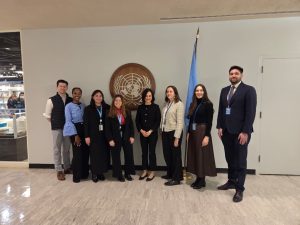
WYA advocacy team at the UN Commission on the Status of Women