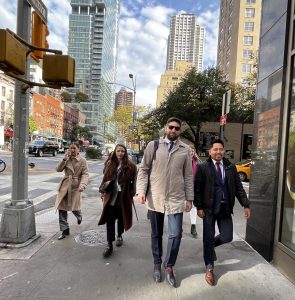
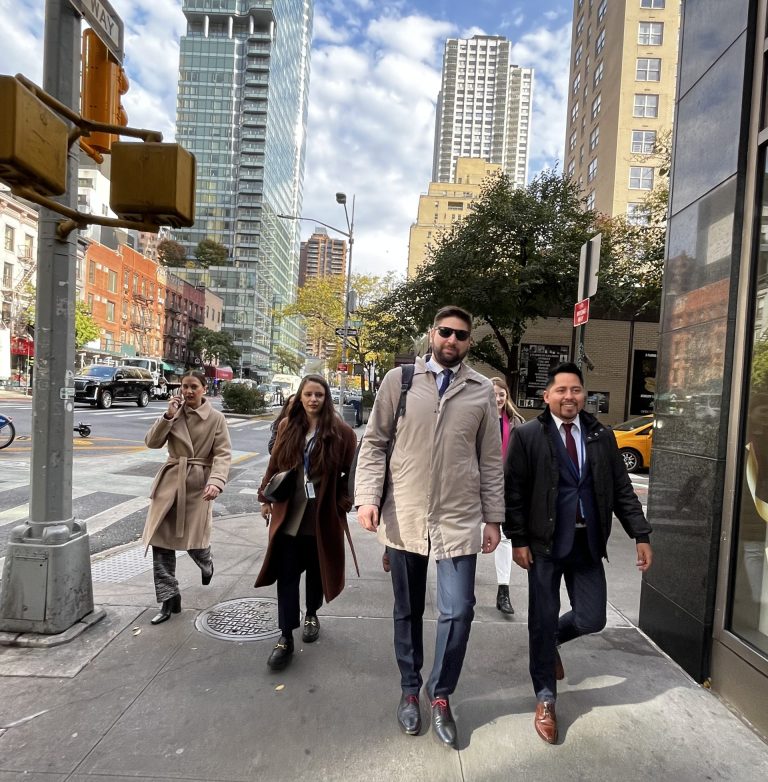
On the road to Panama City, toward the halls and microphones of the Organization of American States General Assembly (OAS), the World Youth Alliance prepares to join leaders and diplomats, gathering to discuss democracy, human rights, development, security, and regional cooperation, from June 22–24, 2026.
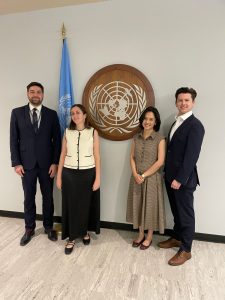
Representing the World Youth Alliance at the OAS, the principal decision-making body of the inter-American system, will be Mislav Barišić and Ronald Ulloa. Mislav serves as the Director of Policy and Research for World Youth Alliance. With previous experience as Director of Advocacy in Brussels focusing on the European Union, as well as work at the United Nations, he has played a leading role in WYA’s policy, advocacy, and educational initiatives for the previous 7 years. Joining him will be Ronald Ulloa, a member of WYA Latin America and graduate of the University of Piura with a background in Human Rights and Public International Law. Ronald completed the Advocacy Academy and in 2022, he participated in the 52nd OAS General Assembly held in Peru, an experience that strengthened his commitment to promoting the intrinsic dignity of the human person within the Inter-American human rights system. In recognition of his leadership with World Youth Alliance Latin America and his ongoing commitment to the defense of human dignity, Ronald was awarded the World Youth Alliance Viktor Frankl Prize this year.
Shared dialogue. Participation. Hemispheric cooperation. The OAS (like the EU and the UN) offers a welcoming proposal: civil society has a seat at the roundtable. But these days, WYA representatives are finding out that the table’s already been reserved. And the mic at the “open mic” has been turned off.
As we reported last year, the General Assembly of the OAS presents as a space of shared dialogue; an opportunity for civil society to participate in shaping hemispheric policies. Yet for many representing civil society organizations, the experience did not match the rhetoric. Only a handful of organizations received the “golden pass” into the General Council chambers — with no explanation and zero transparency as to who, how or why. This is a concerning trend at the international level in the post-COVID age: procedural ambiguity and predetermined closed-door “consensus” meetings.
International organizations increasingly face skepticism regarding democratic accountability and ideological neutrality. This lack of transparency is not a minor procedural concern. It strikes at the credibility of the OAS itself as an institution that claims to promote democratic participation, accountability, and inclusive governance across the hemisphere.
This year, as the road bends once again towards the OAS in Panama City, WYA will once again meet and engage with diplomats, civil society leaders, and representatives from across the Americas, to contribute meaningfully to discussions on human rights and development. Since its inception in the halls of the UN in 1999 – and extending all the way into these international bodies today – WYA continues to speak out against ideology and power and to remind the representatives why these institutions were built in the first place: to place human dignity at the center of public policy.